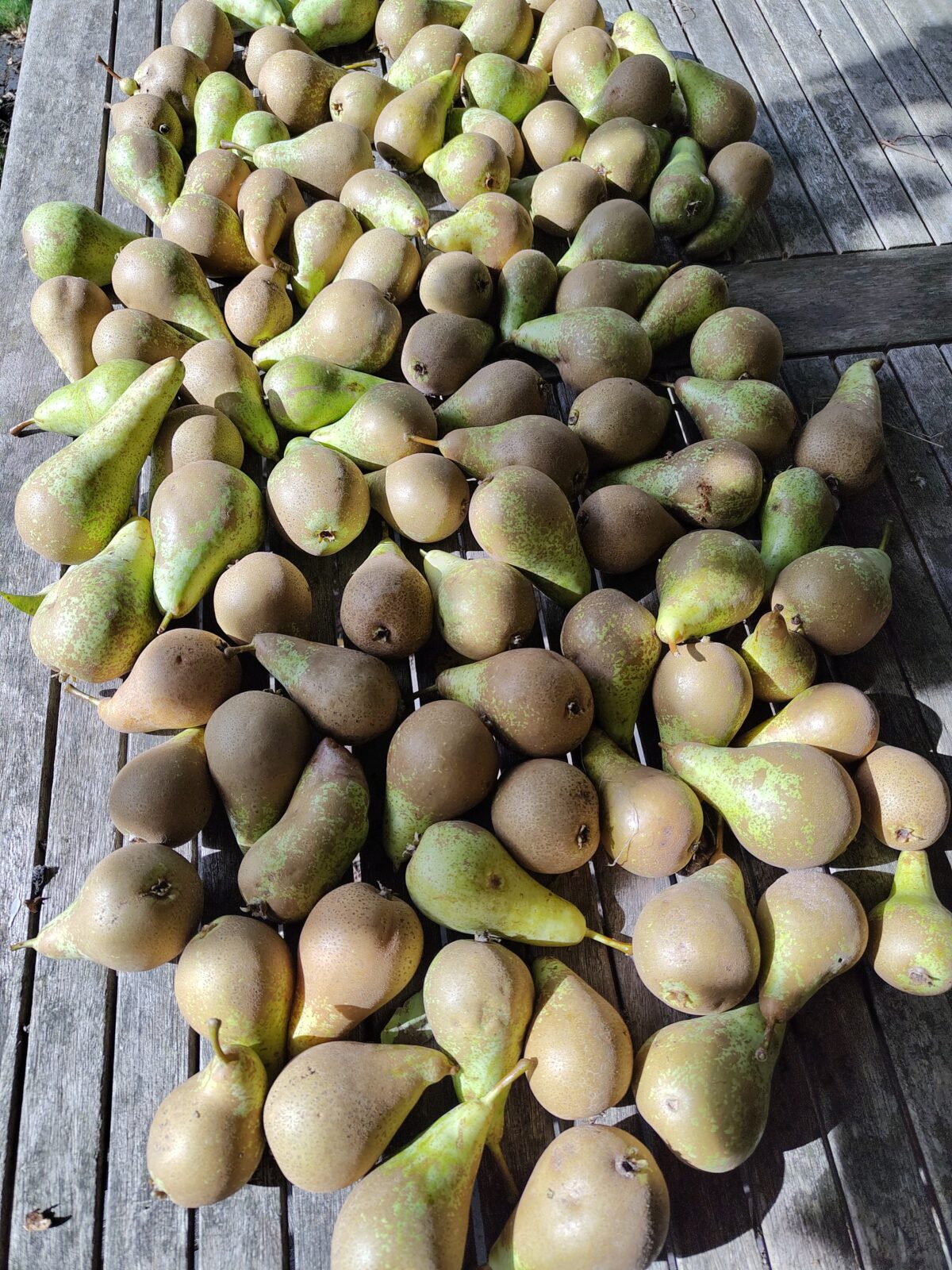
Its early October, so the summer must be properly over. Surely? The weather forecasters aren’t so confident. Its still uncommonly warm even for an ‘Indian Summer’. But the darker evenings prompt me to look back on what has most certainly been an extraordinary summer, even if its not quite over yet. And while the drought, wildfires, and heat waves have caught the headlines its their impact on my fruit and vegetable growing that I want to reflect on. It all started so well. Wet winter (another challenge) gave way to a promising Spring with lots of blossom on the fruit trees, damp soil and warm enough to plant seeds and seedlings out. All went well until late May when the first heat wave struck, and its been down hill ever since. Now that we are, kind of, out the other side, its stock take time. I’m never afraid to plant a wide range of vegetables, and its inevitable that some just wont flourish whatever the weather – so its the ‘don’t put all your eggs in one basket’ principle. Boy am I glad I can take that perspective. The ‘maybe next year will be better’ principle.
Lets start with what has worked – its not a long list and even the successes are relative or need qualifying. Early potatoes like Charlotte and Rocket have been pretty good. In early, out early, before too much damage could be done. Later ones like Desiree and Pink Fir Apple have been a disaster. In the case of Fir Apple I actually got out less in bulk than I planted. Just, on average two tiny spuds per plant, so small that an entire rows produce fitted into the top pocket of my shirt with room to spare. Garlic, one of this years successes, it liked the early damp and the later heat. Tomatoes – pretty spectacular, still cropping well in October along with a couple of experimental tomatillo plants. Salads, stews, and plenty to freeze too. Basil, a glorious fragrant delight. Both green and purple have thrived, though like the tomatoes have needed constant attention especially regular watering. If that has at times in the sweltering heat felt like outdoor house work, at least there has been plenty of aromatic leaves to make up for it. Those other salad staples, cucumbers and lettuce, forget it. The punishing watering regimes from June through August meant some things never got planted and others – like cucumbers just never made it. Same was true of onions and shallots. They are water heavy and never thrived. They soon fell victim to the enforced triage of the watering rota. Beans were a curates egg, if that is possible. Broad beans did OK enough for a few meals before the heat got to them, but not enough to freeze as in most years. Runner beans, poor things. They don’t like the heat at all, their flowers don’t set. Note to self. Runner beans are a victim of climate change. 2025 will be last year I ever successfully grew some of my favourite vegetable.
It isn’t just the fruit and vegetables that were finding the heat challenging. The wild life was too. Most of the time (squirrels excepted) I can manage the tithe that wildlife take from the plot, ‘the angels share’ as whisky distillers put it. But this year drought brought forth a new boldness, from Muntjak, pigeons and even foxes. Anything green leafy was fair game, but even the spikyer leaved plants like courgette and squash fell victim to hungry and thirsty deer who ate the courgettes like they were ice lollies, and grazed the squash plants to within an inch, and beyond of their lives.
So what about those blossom-laden fruit trees? Yes they matured into decent fruit thanks to the bees, in very large quantities in fact. Two top scorers were cherries and greengages. I had the foresight to pick the only partly ripe greengages before going on holiday for two weeks in early June.T hey ripened at home and were absolutely delicious. Plenty to give away even. It wasn’t exactly foresight that led to a good cherry crop. In previous years the birds (did I mention pigeons?) ate them all before they were ripe enough to pick (I hope they got tummy aches), but this year I invested in sleeves to protect cherry laden branches. It mainly worked, but the pigeons worked out that if they stood on a strong enough branch they could peck through the sleeve and eat the cherries underneath anyway. Luckily they only managed this with one branch, and the shocked manufacturers supplied a new sleeve for free when presented with the photographic evidence. Pears and apples there were in abundance and juice makers Tiddley Pommes came by in early August and took two trees worth of crops, producing 45 bottles of juice. Not bad, but less than last years fifty one. Why less with such a good crop? Because the James Grieve were basically over and rotting on the tree or on the ground by early August. It was too hot for them. The other apple trees produced substantial quantities but the quality was poor, a high proportion had what Lady Muck calls ‘visitors’. That rather charming characterisation disguises the destructive power of the beasts, and nigh on 75% of the crops has been damaged. The same applies to pears. They look wonderful until they start to ripen and suddenly the rot has spread from the middle.
Which leaves ‘The Muck Report’ to round up on the soft fruit. Here too disaster reigned. The raspberries couldn’t stand the heat, and neither could the red and blackcurrants. None produced anything of significance and around half of the currant bushes died. The only exception were gooseberries – I got in just before the squirrels got to the crop (they took about 20%) somewhat over 3kg, but it was 13 kg last year. Consolation prizes: blackberries which were super abundant and juicy, but needed to be picked in June and July, and grapes, twenty three bunches of superlatively juicy ones from a single vine which has never produced anything seriously edible before. Some fairly obvious pointers to the crops of the next decade in this years successes. And time to put the thinking cap on about what Muck should grow to make that transition.